02/16/22 Team Meeting


DIDACTIC – Attachment 101

CEU TRAINING: Attachment 101
DATE: 02-16-2022
TIME: 11:00-1:00 CST
OUTSIDE STUDY: 1 hour
DIDACTIC PRESENTATION: 2 hours
EDUCATOR: Melissa Abello
SOURCES: Cradle to Grave, Attachment and the Transformation Process, AEDP Interventions


Introduction: 
Attachment theory does what we have never been able to do.  It gives clinicians a secure base to stand on.  To look at the complex dramas that individuals, couples, and families are in and then to be able to systematically change the elements! We could go on forever addressing symptoms in a distressed person, couple, and family.  It allows us to see what’s going on and to create profound and lasting change (Cradle to Grave).


What is Attachment?
A newborn infant clings to her caregiver. A baby gazes wide-eyed in his mother’s eyes as he nurses. A toddler cries out for solace when overcome with distress, and finds comfort and reassurance in a soothing voice and warm embrace. It is well known by now that our brains are wired from birth to connect, not only at the microscopic level of synapses and dendrites, but also at the macroscopic level of primary relationships (Solomon and Siegel, 2003). 

Early attachment relationships shape an infant’s neurobiology and set the course for his or her future biopsychosocial self (Schore, 1994, 2009). Mediated by the greater social environment, this bi-directional, dyadic process directly influences the final wiring of our brains and organizes (or disorganizes) our future social and emotional coping capacities. 

“The attachment relationship…directly shapes the maturation of the infant’s right brain, which comes to perform adaptive functions in both the assessment of visual and auditory socio-emotional communication signals and the human stress response…The ultimate product of this social-emotional development is a particular system in the prefrontal areas of the right brain that is capable of regulating emotions…including positive emotions such as joy and interest as well as negative emotions such as fear and aggression” (Schore, 1996, p. 63). Because subcortical systems of the infant brain are dominant for the first three years of life, and because the neurobiology of emotional experiencing “resides” in the right brain, infant attachment, seen through the lens of neurobiology, occurs primarily through what have come to be known as right-brain-to-right-brain interactions (Schore, 1996, 2001, 2009; Trevarthen, 2001). Put simply, early history is recorded experientially, not linguistically, through face-to-face, body-to-body processes of affective communication between infant and caregiver.

Predictable physical and/or emotional connection with an attachment figure often a parent, sibling, longtime friend, mate, or spiritual figure clams the nervous system and shapes a physical and mental sense of a safe haven where comfort and reassurance can be reliably obtained and emotional balance can be restored or enhanced.  The responsiveness of others, especially when we are young, tunes the nervous system to be less sensitive to threat and creates expectations of a relatively safe and manageable world.

The emotional balance promotes the development of a grounded, positive, and integrated sense of self and ability to organize inner experience into a coherent whole.  This grounded sense of self also facilitates the congruent expression of needs to attachment figures; such expressions are likely to result in more successful bids for connection, which then continue to build positive models of close others and accessible sources of support.

A felt sense of being able to depend on a loved one creates a secure base–a platform from which to move out into the world, take risks, and explore and develop a sense of competence and autonomy.  This effective dependency is a source of strength and resilience, while the denial of attachment needs and pseudo self sufficiency are liabilities.  Being able to reach out to and depend on reliable others are internalize a felt sense of secure connection with others is the ultimate resource that allows our species to survive and thrive in an uncertain world.

The key factors that define the quality and security of an attachment bond are the perceived accessibility, responsiveness, and emotional engagement of attachment figures.  These factors can be translated as the acronym A.R.E.  (are they there for me?)

Those who are securely attached as comfortable with closeness and their need for others.  Their primary attachment strategy is then to acknowledge their attachment needs and congruently reach out in a bid for attachment figure to make or maintain contact.  When this figure responds, this response is then trusted and taken in, calming the nervous system of the one who reached out.  By providing one with such an effective strategy, attachment security appears to buffer stress and potentiate positive coping throughout life (Cradle to Grave).


Neurobiology of Attachment: 

Beginning at birth, right-brain-to-right-brain, contingent processes such as holding, touch, gaze sharing, face to face contact, entrained vocal rhythms, and spontaneous moments of play and delight are crucial for (i) the regulation of the autonomic nervous system, (ii) optimal brain development, (iii) the emergence of stress- and affect-regulation, and (iv) the creation of secure attachment (Lyons-Ruth, 2006; Porges, 2009; Schore, 1996). Our earliest perceptions of both safety and danger are pre-linguistic and somatosensory: we carry these non-verbal markers of self-states with us throughout our lives. Additionally, because the hippocampus, a region of the brain responsible for organizing our memories in an “autobiography” of time and space, is not fully functioning until 1.5 to 3 years of age (Nelson, Thomas & De Haan, 2006), early organization of emotional experience remains quite literally a felt experience that emerges untethered by chronology or geography.

Just as the feeling and experience of secure attachment discussed earlier is rooted in the pre-linguistic, somato-sensory-motor structures of the right brain, so too is the feeling and experience of danger (van der Kolk, Roth, Pelcovitz, Sunday, & Spinazzola, 2005), as well as the feeling and experience of rejection, abandonment, and neglect (Schore, 2009). Recalling that the hippocampus is not fully available for processing memories until a child is 18 to 36 months of age (Nelson, Thomas & De Haan, 2006), early attachment trauma can be understood as the result of a caregiver’s failure to regulate body-based stimuli, and the feeling of danger and chronic stress that results. The child’s perceived danger in these situations is right-brain mediated and, at this point in her development, implicitly, not explicitly, remembered (Ogden, 2009; Schore, 2009). As van der Kolk (1996) now famously states, “the body keeps the score.” It is this recognition of the salient role of somato-sensory-motor, right-brain mediated processes in chronic, early relational trauma that provides us with a neurobiological context for making sense of PTSD symptoms, i.e., flashbacks, body sensations, startle responses, behavioral impulses, shame; and a fortiori, of the symptoms of complex PTSD, i.e., somatic and emotional dysregulation, hyper- and/ or hypoarousal, profound mistrust, shame, dissociation, etc. (Fosha, Paivio, Gleiser & Ford, 2009; Gleiser, Ford & Fosha, 2008). In the absence of external assistance with affect regulation, or when the caregiver is the source of stress and danger, overwhelming emotional events suppress hippocampal activity and may cause permanent shrinking to this part of the brain; they also leave the amygdala, the part of the brain with the primary role of appraising danger and threat, on high alert in a chronic state of activation (Schore, 2003).

Overwhelming threat may also lead to the simultaneous activation of the SNS and PNS resulting in the dissociative freeze response (Levine, 1997; Ogden, Pain, & Minton, 2006; Porges, 2009). States of greatest threat may lead to the activation of the dorsal vagal branch of the parasympathetic nervous system (PNS) and accompanying symptoms of hypoarousal, such as muscle weakness, depression, chronic fatigue and gastro-intestinal symptoms, as well as the potentially life-threatening analgesic effects of tonic immobility in the face of mortal danger (Porges, 2009). 

Later, the threshold lowered, traumatic events may then be more easily recorded in sub-cortical, implicit memory either because the amygdala does not succumb to stress hormones and/or because the hippocampus is under-developed due to earlier, chronic trauma. Trauma also compromises the flow of information between the hemispheres: it activates the right brain, it deactivates the left brain (Lanius, Williamson, Densmore et al., 2001; Rausch, van der Kolk, Fisler et al., 1996); and it compromises the corpus callosum (Teicher, 2002).

Traumatic experience and contingent communication are like oil and water: They don’t mix: “Exposed to traumatic reminders, subjects had cerebral blood flow increases in the right medial orbitofrontal cortex, insula, amygdala, and anterior temporal pole, and a relative de-activation in the left anterior prefrontal cortex, specifically in Broca’s area, the expressive speech center in the brain, the area necessary to communicate what one is thinking and feeling. {these studies demonstrated that] when people are reminded of their traumas, they activate brain regions that support intense emotions, while sharply decreasing the capacity to inhibit emotional expression and to translate experience into communicable language” (van der Kolk, 2006, p. 2). 

Putting it all together: chronic misattunement between caregiver and child leads to non-optimal levels of stress and eventually to insecure or disorganized attachment; disorganized or insecure attachment both causes, and predisposes the individual to, trauma (i.e., being alone with and overwhelmed by unbearable, unregulated affective experiences); stress and trauma damage both cortical and subcortical structures of the brain, further reinforcing a cycle of persistent and pernicious stress in the absence of affect regulatory strategies, which interferes with optimal attachment (Lyons Ruth, 2006), and regulated, contingent emotional expression and communication. Put simply, early relational trauma carves its way deeply into the body, brain, and nervous system. At the microscopic level, this may look like a shrunken hippocampus, or an overactive right amygdala, or chronically high levels of cortisol wreaking havoc on one’s physiology (Schore, 2009). At the macroscopic level, we are likely to see the familiar symptoms of affect dysregulation that present extreme challenges to developing safe, adaptive and satisfying relationships both intra-psychically and interpersonally (van der Kolk, et al., 2005).


Secondary Models and Attachment Strategies: 

If others have been perceived as inaccessible or unresponsive or even threatening, when needed, then secondary models and strategies are adopted.  These secondary insecure models can take the form of vigilant, hyperactivated, anxious ways of engaging with others and regulating attachment emotions or of avoidant dismissing, and deactivated strategies.  The first of these secondary models

  1. Anxious attachment is characterized by sensitivity to any negative messages coming from significant others and by fight responses designed to protest distance and get an attachment figure to pay more attention and offer more reassuring support.  
  2. Deactivated avoidant responses are flight responses designed to minimize frustration and distress through distancing oneself from loved ones who are seen as hostile, dangerous, or uncaring.  Attachment needs are minimized, and compulsive self reliance becomes the order of the day.  Vulnerability in the self or perceived vulnerability in others then triggers distancing behaviors.  
  3. Disorganized attachment:  This secondary model arises when a person has been traumatized by an attachment figure.  He or she is then in a paradoxical situation in which loved ones are both the source of the solution to fear.  Under these circumstances, this person often vacillates between longing and fear, demanding connection and then distancing, and even attacking when connection is offered.  This type of response is called disorganized attachment in children but it is termed fearful avoidant attachment in adults and is associated with especially high distress in adult relationships
All people use fight or flight strategies at times in relationships; they are not dysfunctional per se.  They can become generalized and habitual, rigidifying into a style that ends up constraining a person’s awareness and choices and limiting his or her ability to engage constructively with others (Cradle to Grave).


Building Attachment


Therapeutic Stance: 
  • The primary agent of this change is a patient’s emergent capacity for deep, somatically based connection to her emotional experience in the context of a safe, secure relationship with a therapist who embodies the characteristics of a loving, attuned and self-possessed other (Fosha, 2000). 
  • From the get-go, attachment therapists strive to actively and explicitly foster secure attachment by offering a new experience of emotional safety. The stance is intentionally positive.  The positive tone of the relational experience is crucial. Positive vitalizing experiences and positive dyadic interactions are the stuff of secure attachment, the stuff of resilience, and the stuff of growth and expanding health and mental health (Fosha, 2009; Fredrickson, 2001; Lyons Ruth, 2006; Russell & Fosha, 2008; Schore, 2001). 
  • The therapeutic stance is welcoming, encouraging, affirming, and emotionally engaged. It is focused not only on the patient’s intrapsychic experience, but also on the “we-ness” of the therapeutic process (Fosha, 2000, 2001; Prenn, 2009).
  •  Recognizing relational trauma as a result of unbearable aloneness in the face of overwhelming emotions (Fosha, 2003), aloneness that stems from failures of earlier attachment relationships to sufficiently regulate affective experiences, an AEDP therapist explicitly conveys– through his self-possessed warmth, emotional availability, and desire to know and embrace the full range of a patient’s emotional experiences– that, this time around, things will be different (Fosha, 2000, 2003, 2009). 
  • To begin with, we want the patient to experience that we welcome all his or her feelings, including those which his or her relational history required her to disavow, defend against, or cordon off from experience and expression. 
  • It requires specific clinical actions. Informed by what decades of developmentalists and attachment researchers have shown to directly facilitate secure attachment between mothers and their babies (Ainsworth et al., 1978; Beebe & Lachmann, 2002; Fonagy, 1999; Stern, 1985; Trevarthen, 2001; Tronick 1998), 
  • The therapist, like the security-engendering caregiver, is proactively engaged, affirming, and available to actively help his patient regulate difficult emotions and organize confusing experiences (Fosha, 2000, 2001).


Therapeutic Technique In First Session:
  • Our First session is SACRED with our clients. Only encounter that we will ever have that has no history. We are creating history and we come to it with no history of each other
  • One way of understanding this finding is that the task element translates into a felt sense that the therapist is tuned in to and aligned with the client in a way that is relevant to the client’s concerns and goals. 
  • Below is what we are asking, but during that attachment is what we are doing!
  • First Session: 
    • What brought you to counseling today?
    • Supporting and Deepening the Client’s Exploration of the Presenting Issue (immediately “undoing aloneness”)
    • Validation of their experience
    • Assisting by giving new and deeper wording 
    • Summarize and reflect giving the deeper wording.
    • Begin to emotionally attune (ie: stepping into feeling with the client not watching them feel) 
    • What are you goals for our times together?
  • Repeat Goals and validate
    • Identify desire for healing as a transformational glimmer and intensify it.
  • Provide any treatment direction based on presenting issue
    • Consider as you sat with the client if any of the following were more prominent/present and review protocol following session and process with supervisor how to apply protocol for your particular client.
  • Meta-Process: What has the been like to do this with me today?know you have accomplished what you desire to in counseling?

    • Other Tips: 
      • Qualities such as flexibility, persuasiveness, affect modulation and expressiveness, warmth and acceptance, and the ability to communicate hope have also been found to impact the alliance and treatment outcome.
      • Establish a way of being with each other
      • Utilize self-disclosure
      • Make implicit explicit 
      • Notice with them what it is like to have their first session with you 
      • Explicit experiential 
      • Encourage them to notice what it is like emotionally to sit with you (using the body) 
      • Dyadic affect regulation – you cannot do affect with a still face.  People need to see us being engaged, openly empathic, delighting in them, loving them, confronting them, sharing our feelings.  Fundamental to a stance of engagement and presence that will create that attachment.  It is that which develops as a result of individual being alone in face of overwhelming emotion.  Fundamentally has to do with aloneness.  Undoing aloneness.  From beginning we want to be with: not just as witnesses, supporters, or empaths.  Existing in the heart and mind of the other. Our clients need to know and feel and are capable of reflecting on fact that they exist in our hearts that will contribute to attachment security.


Using Attachment for ASSESSMENT
  • During and following the session – Notice their attachment style:
  • We make sense of the world through attachment and how they respond to you tells you a lot about them.  It allows us to know if they are able to access what is necessary to heal.  This lets us know what we may need to help with, so they can get to a place of healing.  If they cannot attach with us then they cannot heal because healing does not happen alone.  How someone responds to us can indicate whether or not there is trauma present in their background and the potential need in the future for us to be able to help them with that as well.  Some basic questions in helping us to assess this are:
 
  • When you moved toward the client, how did they respond?  
    • Did they welcome this?
    • Did they move away? 
    • Did they freeze?
During and following session – assess if client matches their affect with their words
Understanding how these things match indicates to us where they are at in their healing process.  
  • How integrated did the client seem when addressing what brought them into counseling.  
    • Did what they were saying one moment match what they are saying later?  
    • Did facial and body expression match content?  
    • Did the client seem over or under regulated?


Attachment History in Second Session:
Attachment History Questions: This form will gather information about your early attachment relationships and experiences and beliefs around emotion, comfort, and soothing [and sex, if applicable]. We do not send this to the client, but use it as we go through our second session with them.  If working with a couple we do with both present in the session.  In the second session, we notice based on their attachment histories how the wounds of their childhood occurred and how they developed their strategies for coping!  
As the client shares their experiences it helps us to ask them what they did with that pain – this informs us of the attachment style they lean towards and allows us to understand what their defenses might look like and how we can honor and bypass them.


Working with Anxious Attachment Style: (Natural Pursuers)
How this may show up: In the face of conflict the anxious attachment style often initiates communication and moves toward their partner or therapist.  They are more likely to:
  • Talk more, especially about emotions, and seek a response
  • Initiate confrontation out of anxiety
  • Take control, manage self and others
  • Worry about being “too much”
  • Initiate and reach out for couples therapy
Their goal is to get closer. They makes continuous efforts to check in and connect, seeking care and reassurance from their partner. When there’s an issue, they most often seeks to work things out together, to communicate. They would rather fight than suffer through silence. They can feel like they’re putting in more work than their partner to maintain the relationship; however, this can lead to resentment or burnout if they perceive their partner to be consistently absent.
Common Anxiously Attached Phrases:
  • “I feel like I don’t matter”
  • “I can’t get through to them”
  • “I can’t rely on them”
Often their fear is rejection. They take risks to share their feelings and needs, explore others experiences, and address problems, so it is so painful for them to receive little or no response from others. These tendencies are born out of a history of abandonment, of one’s feelings not being heard, one’s needs not being met. Anxiety thrives in distance and in attempts to reach out to their partner their anxiety and fear can be expressed as control, criticism or anger. There is more hope in anger and fighting than there is in silence. While their actions can feel like overwhelming pressure for their partner, their intention is to reestablish safety and closeness.

When needs are being met — when they feel heard, connected, seen — their anxiety dissipates. They experience calm, warmth, and hope. They are energized to care for their others and relax.


Working with Avoidant Attachment Style (Withdrawers): 
How they might show up: 
  • Placate or avoid confrontation
  • Struggle to find language for their emotions
  • Say “I don’t want to talk about it”
  • Leave the room out of overwhelm or anxiety
  • Shut down, numb out
Their goal is to have less fighting. Since a fight can feel so overwhelming, filled with anger and pressure, they would rather have space to cool down and self-soothe. They tries to work things out on their own and may need more time to organize their thoughts or figure out how they feel in the first place. Withdrawers tend to compartmentalize their feelings to maintain the status quo, which may look like using positivity (e.g., “let’s just have a good night”) to avoid difficult conversations.
Common Avoidant Attachment Phrases:
  • “I can’t do anything right”
  • “You’re overreacting”
  • “I wait for the fight to blow over”
  • “I don’t know”
  • “There’s no point”
Their greatest fear is failure. Withdrawing tendencies are most often born out of a history of failed emotional interactions. Someone’s pattern of avoidance can be a protective shield, an indication that they’ve been hurt before. Withdrawing serves as a skill of survival keeping one safe from overwhelming or threatening external forces. They may hear you or other attempts to communicate as complaints or criticism that they’ve done something wrong. Rather than engaging in confrontation, they often seek to alleviate pressure through positivity, humor, or deflection. While this may be frustrating for you as a therapist their goal is to protect themselves and your relationship.


Disorganized Attachment Style: 
How They Will Show Up: 
  • Contradicting messages from behavior in intimate relationships (“I hate you, but don’t leave me.”)
  • An inability to regulate emotions or how to respond to the emotions of others
  • Alternating between clinginess and distancing
  • Difficulty bonding with, opening up to, and trusting other people
  • A blend of the behaviors of anxious and avoidant attachment styles
Common Phrases:
  • I will never be good enough for someone
  • I am not worthy of being loved.
  • No one will ever truly love me.
  • I deserve to be alone and lonely.
 
Adults with a disorganized attachment style fear intimacy and avoid proximity, similar to individuals with an avoidant attachment style.  The main difference for disorganized adults is that they want relationships.They have trouble believing that their partner will love and support them as they are. These adults expect and are waiting for the rejection, disappointment, and hurt to come. In their perception, it is inevitable.This mindset can turn into a form of self-sabotage, causing the disorganized adult to end a relationship prematurely.  It might also be a type of self-fulfilling prophecy. So, the disorganized adult expects and predicts that they will be rejected by their partner. Even when there are no such signs, he or she starts behaving in a way that leads to fulfilling the expectations (the end of the relationship).  It is also a self-fulfilling prophecy when an individual with a disorganized attachment style chooses partners that induce fear. Thus confirming their perception that they can’t trust other people (emotionally or physically), no matter what.


Download the Didactic Attachment 101 Slides Here

Download

Interventions To Working With Attachment Styles: (We Will Process in Meeting)

https://aedpinstitute.org/wp-content/uploads/2016/11/FIG3-Clinical-Interventions-for-each-Attachment-Style.pdf

Team Discussion


MCO - CEU Tracker

  • MM slash DD slash YYYY

02/9/22 Team Meeting

Feb. 9 -Life @ MCO Report

New Hire Welcome

Lauren Pratt 2/14

Congratulations

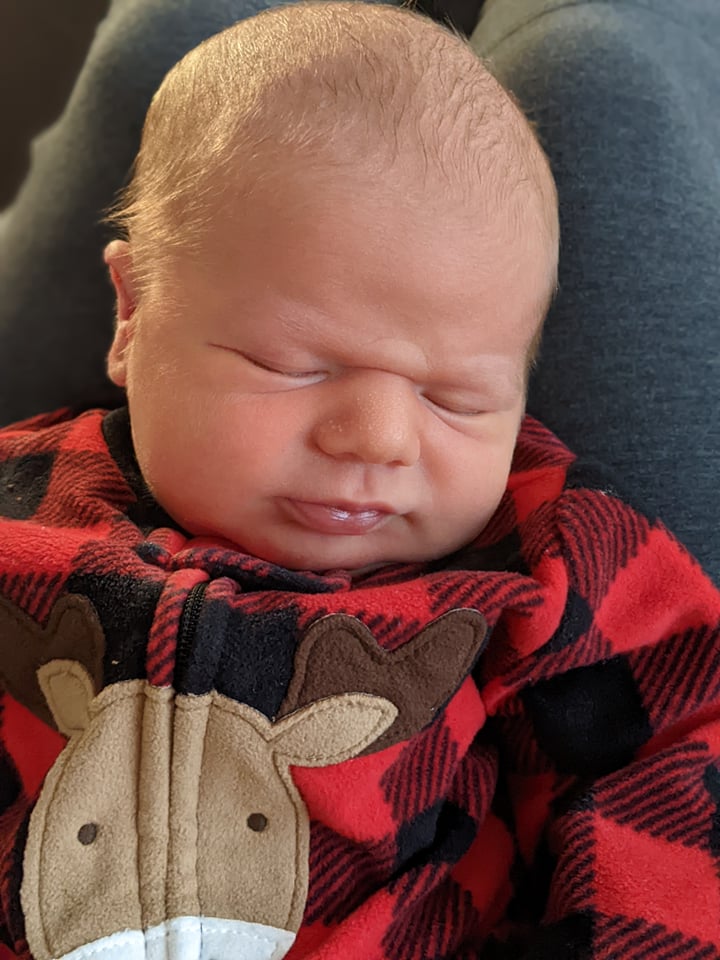
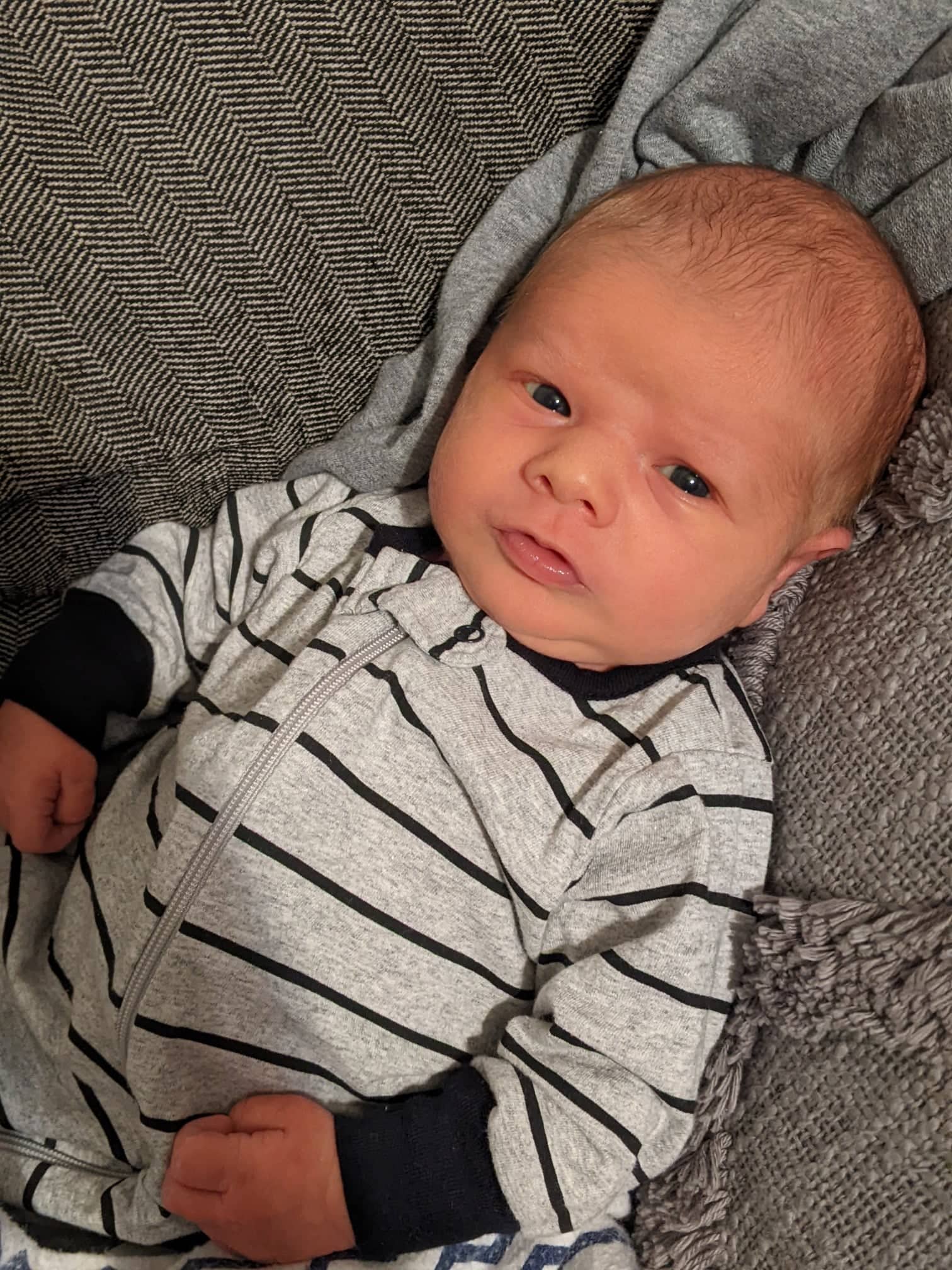
Congratulations Danielle Schaefer and family!

Introducing Rowan Schaefer born January 26, 2022
Mommy and baby are doing amazing.

Upcoming Holiday Reminder

Presidents Day-Washington’s Birthday (Monday, February 21st)

02/2/22 Team Meeting

Feb. 2 -Life @ MCO Report

New Hires

Shaelyn Misiak 1/31- Resident FT

Departures

Emily Wilhelm

Transfers/Promotions

None

Policy/Process Updates

MCO Discipline Process
Discipline frequently asked Q&A


February Birthdays

Sarah Cowan- 2/14

Emily Scott- 2/27

This past week the clinical leadership team (Guides, Clinical Director and Supervisors) attended a very positive and informative meeting.
Positive Feedback-
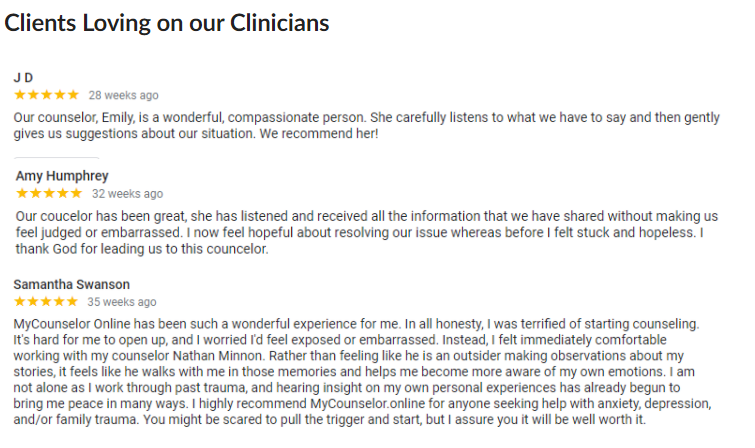
Carrie- “When I began counseling with Carrie, I had no idea what to expect from our sessions. With time and patience, Carrie has helped me walk from lacking confidence to better understanding my needs and learning what I need from others. The growth I’ve received from this space has been super helpful in this season of my life.”


MCO - CEU Tracker

  • MM slash DD slash YYYY

01/26/22 Team Meeting

CEU TRAINING: EFT in Infidelity Recovery
DATE: 01-26-2022
TIME: 11:00-1:00 CST
OUTSIDE STUDY: 1 hour
DIDACTIC PRESENTATION: 2 hours
EDUCATOR: Tara Riggs, MT 3969
SOURCES: Restoring Broken Bonds Live EFT Training and Materials, EFT AIRM (Attachment Injury Repair Model) Training & Materials

Introduction
As you learned a few months ago, engaging grief is an essential component to helping individuals and couples heal from the emotional and relational trauma of infidelity. Shaun Lotter, in this previous didactic, paved the road for where couples need to go and even laid out a progression for how to help them grieve individually, in the presence of one another, and eventually together, in a way that leads to a thorough and complete healing of the injury. In this didactic, you will learn HOW to get to where you want to go using the EFT Tango as your mode of transportation. 

How is couples counseling different in Infidelity Recovery? 
According to Susan Johnson, the following are key differences in working with traumatized couples, namely those dealing with the trauma of infidelity: 
  • More distress and intense cycles of distance, defense and distrust.
  • Psycho-education regarding trauma and how it impacts victim’s responses is necessary.  
  • Violence and substance abuse are more endemic.
  • Alliance is always fragile, monitor it. Collaboration and transparency are essential. 
  • Emotional storms and crises must be expected.
  • Emotion must be contained as well as heightened. Defenses are validated.
  • Shame overrides even positive cues. Addressing model of self is crucial.
  • Need to co-ordinate with other therapies.
  • Safety is everything, risks must be sliced thin and supported at each step.

Role of the Therapist in Infidelity Recovery
This data has several implications for us as therapists in helping couples heal and creating an environment in which safety is foremost. It is vital that the work be slow and thin. Expect to work with defenses in both partners. Both have good reasons to not want to feel; the betraying is fighting off the guilt, shame, disgust, and grief of their own actions which cause him/her to avoid and run from the pain in their partner; the Betrayed would much rather feel anger and disgust toward their partner or be fully through the process of forgiveness and reconciliation, than touch the pain of utter wreckage within themselves. And each time this pain is touched, despite their best efforts to avoid it, their partner is seen as the enemy and the one who caused it or they are forced to contain the enormous emotions within. Therefore, you must be fully with each client as you work with them, supporting each step into the ocean of pain that sits just beneath the surface, going on ahead and inviting them in as you safely contain it. Imagine giving swimming lessons to a drowning victim after the incident. Feel into the victim’s experience within yourself. Imagine the terror, pain, and trauma brought on by the sensation of water against their skin and the sight of the lake in view. This is what the spouses carry into the room each time they come to counseling, except that in the couple session sits the person who took their floatation device and left them to drown. Your role is that of the swim instructor and lifeguard in that scenario. Attunement to each spouse, confidence in yourself and your process, and caution and pacing to the readiness of the clients are all pieces that you will attend to in every infidelity session with every couple. Normalize the PTSD-like symptoms in the Betrayed spouse such as intrusive memories of the event, vigilance and hyperarousal associated with a fear of potential future emotional injuries, shattering of basic beliefs about self, partner, and relationship (Johnson, 2002). Once defenses are navigated, there is not much need for emotional heightening, as the pain is alive and acute. Instead, contain the pain by touching it and offering yourself as a support to be with it and make space for it, and once it is safe, utilize the partner to help carry the pain. 

Goals for Resolving the Injury
In the context of a relationship offering a safe haven and secure base… 
  • Regulate and integrate emotional experiences related to the injury event.  
  • Create secure connections of repair, restitution and belonging leading to healing and recovery.
  • Construct a coherent narrative as meaning, impact, and consequences of the event emerge. 

How the EFT Tango Evolves Across the Course of Infidelity Recovery
Refer to the figure below for a visual representation of the course of treatment over time. The task of the therapist changes with each layer of the pyramid, as well as how the task is accomplished.  
  • See EFT AIRM De-escalation Roadmap for a guide to helping couples create a coherent narrative of the infidelity and achieve de-escalation (Stage 1, Steps 1-4). 
  • See Steps and Interventions of AIRM (Attachment-Injury Resolution Model of EFT) for a breakdown of therapist’s tasks and interventions for achieving each task over the course of therapy. 
  • Definitions of EFT Interventions in resource above. (See pages 67-72 of Attachment Theory in Practice by Susan M. Johnson for further explanation of general experiential techniques.)
    • Empathic Reflection-  Intervention used during the therapeutic process when you repeat back to the client the “felt sense” or embodied experience of what they are presenting-using wording, affect, tone, energy, metaphor, etc. (“Brain Sync -Sharing” technique for “Naming Feelings” in NICC)
  • Validation- Therapist intervention that honors or affirms the function of a person’s behavior in their struggle, protection, attempt to grow, etc fostering a sense of safety in therapy session. i.e. find the “good reasons” behind the behavior, usually referring to protective action. 
  • Reframing in the context of the cycle and/or underlying attachment fears, pain, needs. 
  • Empathic ConjectureWhen a therapist tentatively offers emotional words or phrases to clients to expand their emotional experience (“Brain Sync- Sharing” technique for “Naming Feelings” in NICC)
  • Heightening deepening engagement with inner experience using RISSSC voice (repetition, imagery, slow, soft, simple, client’s words)
  • Evocative Responding– technique for heightening using questions and statements which elicit underlying emotions, thoughts, perceptions, sensations.
  • Restructuring and shaping Enactments (aka “Encounters”)- The sharing of intensified, distilled, core emotion from one partner to another, used to pinpoint problematic interactional responses, to exemplify new responses, to turn an emerging emotional experience into a new signal to potentially evoke new responses. (“Enacting Mismatch” in NICC)

The EFT Tango is the vehicle we use to help couples move through the acute distress of discovery and disclosure to the healing and recovery of a safe haven and secure base. It is within this Tango that couples feel into their grief, anger, and other intense, unprocessed emotional pain, and incrementally share this pain, first with the therapist, then with their partner. 

Early in the work of Infidelity Recovery, (Steps 1 & 2) the couple is in acute distress and the pain is alive, so the focus of therapy is on the Impact of the Injury. Due to the intensity of the attachment distress, early coping strategies will come online and organize the clients behavior, and if/when they are unable to access their partner, secondary strategies will form. In other words, spouses often feel crazy for the things they are doing and saying and feel very unlike themselves, and this disorientation leads to shame and a shaken sense of self. Psycho-education is used as a form of validation and to normalize behavior and neutralize shame. The EFT Tango is used as a method of co-regulation with the therapist. Reflecting and validating secondary emotional experiences will be a large portion of the work. The client needs to feel understood, heard, and seen in their anger, frustration, disgust, etc. The Betrayed spouse is given permission to mistrust the Betraying partner’s account and we invite them to give permission to their anxiety to exist.  As individual sessions prepare for disclosure, the couples sessions privilege the injury and the work becomes managing the bleed out, i.e. triggers, boundaries, etc. which we call Stabilization and the training materials call “Triage.” For the Betraying spouse, there are enormous feelings of guilt, shame, fear, and grief which may or may not be being defended against with minimizing, blame shifting, etc. Individual sessions leading up to Disclosure (and following it when necessary) should be used to work with these defenses, using empathy and bypassing, and access underlying core emotion in order to ensure that the Betraying partner is safe to be in session with the Betrayed partner. Relentless empathy for both partners is imperitive here, as the coping with the attachment injury takes control of their dance/cycle. 

Steps 3 & 4- Meaning of the Injury- By now, each partner has had experiences of “feeling felt” by you; you have allowed them to feel understood, validated, and normal for their responses, which has proven you worthy of trust and able to be taken in as an internal resource. The work of infidelity recovery cannot move forward until this has happened.  As this happens, defenses soften, and attachment fears and longings will come on line, giving way to the grief of what has been lost and the shaken view of self, view of other, and view of the world and the Betrayed spouse begins the process of making meaning of the injury. Your support is what allows both the Betrayed and Betraying spouses to stay in contact with the pain of the injury, with it’s impact, and tolerate it to completion. The Betrayed spouse will begin to get a sense that the wound is within themselves and the person who caused it is their spouse, but the spouse is not the wound. Help the Betraying partner to use emotion words about themselves, such as angry, hurt, sad, etc. not those that reflect on the partner, such as unloved, uncared for, etc. As the Betraying partner becomes less defended, they are more aware of the impact of the event on their partner, and more able to discuss how it evolved without ambiguity or hiding and with more openness, becoming predictable to the Betrayed spouse and beginning the process of rebuilding trust. The couple is able to explore and understand the pre-injury pattern of disconnection which made the relationship vulnerable to infidelity. 

Markers for end of Stage 1:
  • Betraying partner can feel into the experience of the Betrayed, including impact and meaning of the injury, as well as their own pain.
In Steps 5 & 6, therapy begins to move into the Forgiveness and Reconciliation Stage (Stage 2) . Due to repeated successful experiences of feeling into their pain with you co-regulating their painful emotions, widening their window of tolerance,  the Betrayed partner is now able to articulate their grief, distrust and fear directly to their spouse in enactments/encounters and allow him/her to witness their vulnerability. He or she also begins to ask for needs to be met that would regain feelings of trust, safety, and connection. As the Betraying partner becomes more open to and able to tolerate their own fear, guilt, and sadness caused by their actions, they also become more emotionally accessible, responsive, and engaged (ARE) to their partner by responding with remorse, regret, and empathy. He or she mirrors the pain of their spouse in themselves and feels into their spouse’s pain without defense and stays present without collapsing into shame, vowing that this will never happen again. There is also a shifting into being able to forgive themselves whereas previously they have a sense internally, even if not spoken, of the impossibility and even wrongness of ever forgiving themselves.  If they cannot forgive themselves they cannot fully feel into their partner’s forgiveness, and this maintains distance between the couple.

Markers for end of Stage 2: 
  • Conversations about injury are less rigid and pain is less acute
  • Injury feels like it is behind them
  • Couple engages conversations that were previously avoided
  • Feelings of loss, fear, remorse, and pain are processed
  • Withdrawer is ready to be re-engaged
Step 7 & 8 make up the Consolidation Stage in which the Betrayed partner is able to ask for and receive/accept the care and comfort of the Betraying spouse AND show empathy for the Betraying partner’s experience. The Betraying partner responds with care and selflessness which acts as antidote for trauma and redefines relationship as a safe haven. Therapist underscores, highlights, and heightens this bonding event as an antidote and the relationship as potential safe haven and supports the new narrative of the event. The couple’s connections become more centered around their personhood, genuinely knowing and holding one another, not about the injury.  The injury had been the rallying point, now the strenghth and draw of the relationship is the rally point.
During our time together in Team Meeting, we will watch and talk through video of my work with couples at various steps and stages and how the Tango looks different throughout to see the skills and strategies in action. I look forward to learning together! 

MCO - CEU Tracker

  • MM slash DD slash YYYY

01/12/22 Team Meeting

Jan. 12 -Life @ MCO Report


MCO Wellness Advocate Program: 

Help those you care about connecting with the care they need!

We are so excited to launch the MCO Wellness Advocate Program. As a member of the MCO Wellness Advocate Program, you can help advocate for the importance of mental, emotional, relational, and spiritual wellness, and spread the word about the professional care that MyCounselor provides.
Each person you refer will receive a discount on their first session and, as a thank you, you will receive a $25 gift card of your choice!
The MCO Wellness Advocate Program is a community of people who believe in the importance of biblically integrated and clinically informed Christian Counseling who want to help others connect with counseling that really works! Watch the video below to learn more.


January Birthdays


Kristi Pitts- Jan 3rd

Happy Birthday, Kristi!!! I am so thankful for you. You are so kind and fun to work with. I hope you have a great birthday!!! 🙂   – Leah

Britni Hosick – Jan. 5th

Britni!!! It has been amazing being able to work with you and see you grow in confidence and skill! I love your heart and passion for seeing everyone in your life find healing and Jesus! I hope you have an amazing birthday and take time to take in the love and care of everyone who is around you! ~ Lane  

Rebecca Elliot – Jan. 16th

Happy birthday, Becca! Thank you for your dedication, initiative, and flexibility. Your team is always happy to support you because we know you’ve got us in return. It’s a joy to work alongside such a lovely person. Wishing you the best! ~ Brittany


Prayer Requests

Lacey: family is in need of your prayers. Our 8 y/o grandson, Jensen Lee has just been diagnosed with Leukemia.  Please pray for our son and his wife as no parent is ever prepared for this. Please pray for us as our grandparent and parent hearts are breaking as our kids hurt.

January Celebrations

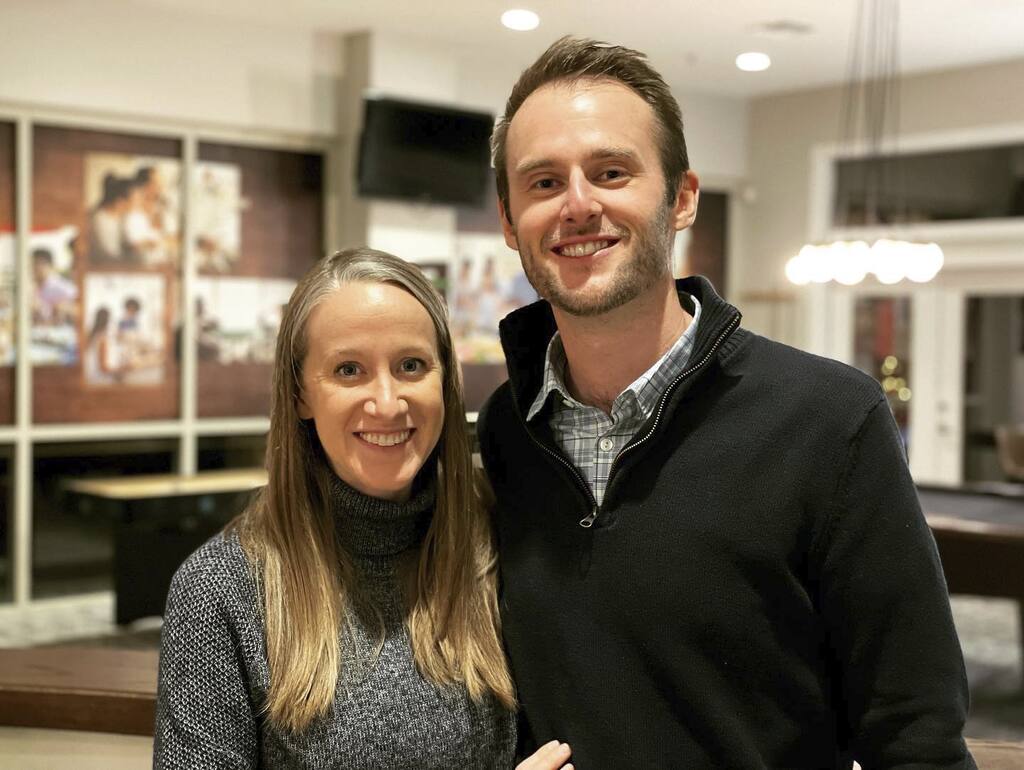
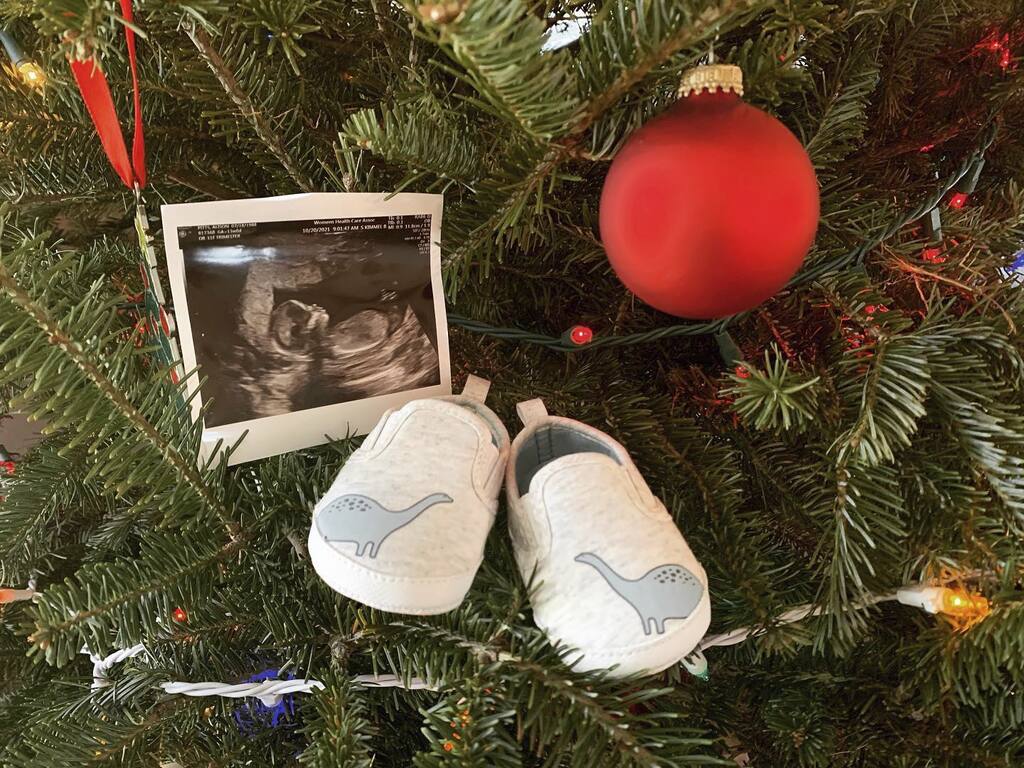
Alison Pitts is pregnant! 


Alison & her husband are expecting a baby boy this April 2022  Congrats!!!!

Robbin has achieved MCO Certification AND is MCO’s next Guide!!!

Congratulations to Robbin Jackson are in order! After 18 months of putting in work to become the best therapist she could be, Robbin has achieved MCO Certification AND is MCO’s next Guide!!! From the day she onboarded, Robbin has worked hard to read and watch any and everything that would make her a better therapist and has placed herself in a posture to learn and receive from anyone who would pour into her. Robbin takes meticulous notes in every Triad, Review, and Didactic in order internalize feedback and implement interventions. She is constantly working to keep a NICC-focused map in her mind and understand client’s presenting issues from our model. Her hard work has paid off, as Robbin has worked her way from Onboarding to Certification and received the rightful designation of Guide as well! 

CONGRATULATIONS, ROBBIN! This is such a fitting honor and Leadership is thrilled to have your heart, work ethic, and wisdom on our team! We know you will Guide our Residents with all that you are and all that you have and we praise the Lord that he has sent fit to gift MCO with you! Keep growing and reaching! 

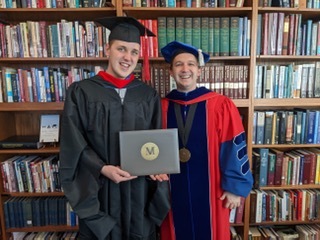
Lane received his Master of Divinity Degree

“As of Friday, Dec. 10th, I officially graduated with my Master of Divinity with an emphasis in counseling!” ~Lane Jordan


Praise Report

After a few years of searching and applying for a new job, my husband, got his dream job as an Electrical Engineer at Boeing! He will be working on a team creating drones for the military. We are so excited for this new opportunity!!  ~ Leona 

MCO - CEU Tracker

  • MM slash DD slash YYYY

01/05/22 Team Meeting

Jan. 5 -Life @ MCO Report


Clients Loving on our Clinicians


January Birthdays


Kristi Pitts- Jan 3rd

Happy Birthday, Kristi!!! I am so thankful for you. You are so kind and fun to work with. I hope you have a great birthday!!! 🙂   – Leah

Britni Hosick – Jan. 5th

Britni!!! It has been amazing being able to work with you and see you grow in confidence and skill! I love your heart and passion for seeing everyone in your life find healing and Jesus! I hope you have an amazing birthday and take time to take in the love and care of everyone who is around you! ~ Lane  

Rebecca Elliot – Jan. 16th

Happy birthday, Becca! Thank you for your dedication, initiative, and flexibility. Your team is always happy to support you because we know you’ve got us in return. It’s a joy to work alongside such a lovely person. Wishing you the best! ~ Brittany


Prayer Requests

Lacey: family is in need of your prayers. Our 8 y/o grandson, Jensen Lee has just been diagnosed with Leukemia.  Please pray for our son and his wife as no parent is ever prepared for this. Please pray for us as our grandparent and parent hearts are breaking as our kids hurt.

January Celebrations

Congratulations to Robbin Jackson are in order! After 18 months putting in work to become the best therapist she could be, Robbin has achieved MCO Certification AND is MCO’s next Guide!!! From the day she onboarded, Robbin has worked hard to read and watch any and everything that would make her a better therapist and has placed herself in a posture to learn and receive from anyone who would pour into her. Robbin takes meticulous notes in every Triad, Review, and Didactic in order internalize feedback and implement interventions. She is constantly working to keep a NICC-focused map in her mind, and understand client’s presenting issues from our model. Her hard work has paid off, as Robbin has worked her way from Onboarding to Certification and received the rightful designation of Guide as well! 


CONGRATULATIONS, ROBBIN! This is such a fitting honor and Leadership is thrilled to have your heart, work ethic, and wisdom on our team! We know you will Guide our Residents with all that you are and all that you have and we praise the Lord that he has sent fit to gift MCO with you! Keep growing and reaching! 


“As of Friday, Dec. 10th, I officially graduated with my Master of Divinity with an emphasis in counseling!” ~Lane Jordan

MCO - CEU Tracker

  • MM slash DD slash YYYY

12/15/21 Team Meeting

Dec. 15 Life @ MCO Report


MCO Wellness Advocate Program: 
Help those you care about connect with the care they need!
We are so excited to launch the MCO Wellness Advocate Program. As a member of the MCO Wellness Advocate Program, you can help advocate for the importance of mental, emotional, relational, and spiritual wellness, and spread the word about the professional care that MyCounselor provides.
Each person you refer will receive a discount on their first session and, as a thank you, you will receive a $25 gift card of your choice!
The MCO Wellness Advocate Program is a community of people who believe in the importance of biblically integrated and clinically informed Christian Counseling who want to help others connect with counseling that really works! Watch the video below to learn more.


Learn More & Become an Advocate: https://mycounselor.online/mco-wellness-advocates/

Clients Loving on our Clinicians

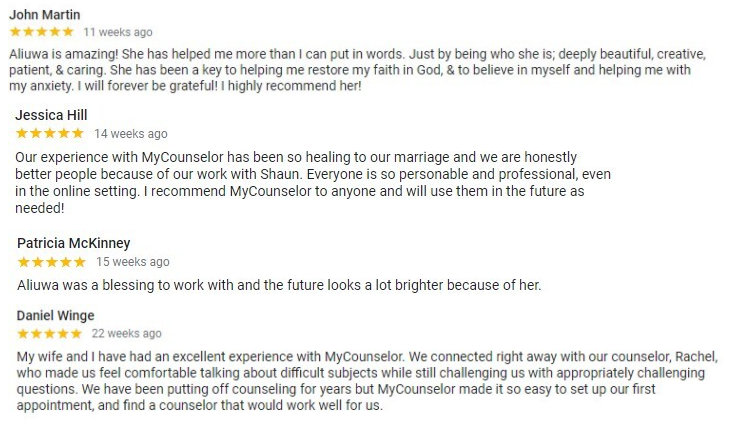
  • Aliuwa: I’m comforted yet challenged positively in ever session. Breakthrough seems attainable now.
  • Allison: They are very helpful!
  • Shaun: My sessions with Shaun has changed me and my relationships. Such an awakening experience.
  • Josh S: Going through counseling with Josh has been life giving.
  • Mary: Love Mary and working with her!.

December Birthdays

Danielle Schaefer: December 1st

“Danielle, you are a beautiful person that deserves the best of birthdays!  I hope your day is filled with much love and fun, making you feel extra special! Your gentleness, sweet spirit and wisdom is such a gift to our clients and the MCO team.  Enjoy your special day and an even better year”!  Rosie

Tina Mendeleyev – December 8th 

“A very Happy Birthday to you, Tina! It has been a gift to work with you and I feel blessed to have gotten to know you a little more over these last couple of months. I truly appreciate just how much you do for us in AR and  with insurance billing. I hope this next year brings you immeasurable joy”! ~ Samantha

Josh Spurlock – December 24th 

“Josh-Happy Birthday!  You are such an amazing leader and friend.  I feel so blessed to have had the opportunity over the years to know and work with you.  I am praying you are blessed on your birthday!  Take time to enjoy something you like with your family!  Here’s to another great year!” ~Shaun

William Woodward – December 27th 

William, hoping you have a fun and memorable birthday surrounded by the ones you love and lots of cake! We are so grateful to have you on the MCO team and hope this year is better than the last.  Happy Birthday!” ~ Rosie

Leona Scifres – December 31st 

Leona, You are such a light! It has been my pleasure getting to know you the last few months. I will always remember our laughter and friendship bonding on the cruise and how you can make anyone feel welcomed and loved! You have a heart of GOLD! I hope you have a wonderful Birthday and a fabulous year!!! I hope you get all the puppy kisses from Goose and get to celebrate with good friends and drinks! Cheers! Hugs, and lots of Love, Ryenn”

Prayer Requests

Lacey: family is in need of your prayers. Our 8 y/o grandson, Jensen Lee has just been diagnosed with Leukemia.  Please pray for our son and his wife as no parent is ever prepared for this. Please pray for us as our grandparent and parent hearts are breaking as our kids hurt.
Sarah Cowan’s Client: I have a couple who needs prayer for the next week when you do your updates.  They are in testing to figure out what is going on with the wife’s health and are being told it could be cervical cancer, but it’s just not confirmed yet.  They planned to try for another baby next year, so they are experiencing a rollercoaster of emotions.  Please pray for grace, healing power, and peace over Jordan and Britni for the month of December, please.  

December Celebrations

I just completed my Bachelors in Human Development and Family Studies Degree last week 🙂 – Alyssa Chandler

As of Friday I officially graduated with my Master of Divinity with an emphasis in counseling! ~ Lane

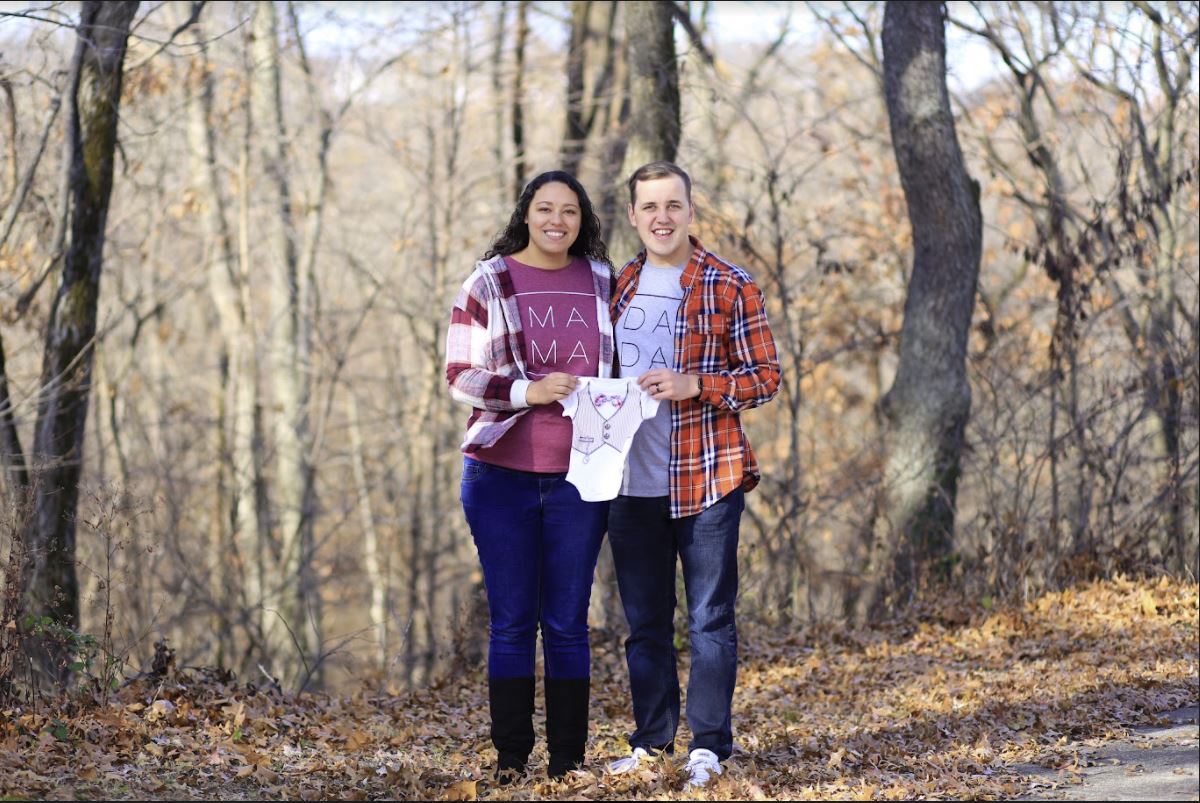
Lane Jordan and wifey are pregnant!  

The Jordans are expecting a baby boy on April 22nd, William Anthony Jordan!  Congratulations!!


Newest Team Members!

William Woodward – I.T. Suppport Coordinator
My name is William and I live in Virginia Beach, VA (have for most my life).  I have been wokring in the I.T. world since 1997.   I enjoy exercising, staying active and traveling (especially to the mountains and hiking to waterfalls).  I love spending time with my girlfriend, family and close friends.  Recently, I have been spending a lot of my free time on various DIY and home renovation projects.  Looking forward to working with you all.

Chauncey Geraldi – Clinician

Jessica Park – Clinician
My name is Jessica and I joined MCO in October. I graduated with my Master’s in Counseling in May 2021 and am pursuing an LPC in Colorado. Colorado Springs is home to me, my husband James, our cowdog Piper, our two wonderful roommates and our roommate’s dog Mercy. It is my joy to be an aunt to the two most adorable boys in existence (can provide photo evidence), and we often talk about moving to the east coast to be closer to them. 
We are part of a 3 year old church plant, where James serves on the global team and I serve locally. 
I enjoy tea lattes with friends, being in the sunshine, and playing with Piper in my free time. 

Felicia Murphy -Matching Specialist

Alice Arney – Human Resources
Alice Arney – Norfolk, VA native has worked in the Human Resources field for over 15 years. She currently works as an HR Manager with Principle Strategies but has worked with Eggleston which is a not-for-profit that employs individuals with disabilities as their HR Coordinator for 14 years. Alice’s responsibilities included managing benefits, compensation, HRIS, employee relations & performance management. Alice has her Master’s Degree in Business Administration with a concentration in HR Management and is working to finish her DBA at Saint Leo University.  In her free time, she likes to spend time with her family, her chocolate lab “Chief” and friends. She loves sports and is a huge Kansas City Chiefs fan.

Greg Cooney – Clinician
Greg received an M.A. in Professional Counseling from Liberty University and holds PLPC licensure in Illinois.  He has 15 years of experience working with individuals facing homelessness and addiction and possesses a deep passion for seeing the transformational power of Christ at work in people’s lives.  He is excited to walk alongside clients as they experience growth and healing and is thrilled to be part of the MCO team.   Greg and his wife, Sharon, have been married for 15 years and have two energetic boys, Chandler (9) and Maxwell (7).  They recently moved to Floyd, VA, a small town located on the Blue Ridge Parkway.   He and his wife enjoy ministering together through music, as well as traveling with their family.

MCO - CEU Tracker

  • MM slash DD slash YYYY

12/8/21 Team Meeting

Dec. 8 Life @ MCO Report


MCO Wellness Advocate Program: 

Help those you care about connect with the care they need!

We are so excited to launch the MCO Wellness Advocate Program. As a member of the MCO Wellness Advocate Program, you can help advocate for the importance of mental, emotional, relational, and spiritual wellness, and spread the word about the professional care that MyCounselor provides.
Each person you refer will receive a discount on their first session and, as a thank you, you will receive a $25 gift card of your choice!
The MCO Wellness Advocate Program is a community of people who believe in the importance of biblically integrated and clinically informed Christian Counseling who want to help others connect with counseling that really works! Watch the video below to learn more.


Learn More & Become an Advocate: https://mycounselor.online/mco-wellness-advocates/

Clients Loving on our Clinicians

  • Mary: My counselor was fantastic. She made me feel comfortable sharing my honest feelings and then shining the truth of Gods Word on them. I’m forever thankful I made the choice to start counseling.
  • Lacey: I have had a great experience with my counselor online.
  • Josh S: My work with Josh has been amazing. I’ve grown and healed in so many areas of my life—even in places I didn’t know needed care!
  • Carrie: I am so thankful to be paired with my counselor Carrie – she is so great at helping me process the things in my life. She’s very relatable and easy to connect with. 

December Birthdays

Danielle Schaefer: December 1st

“Danielle, you are a beautiful person that deserves the best of birthdays!  I hope your day is filled with much love and fun, making you feel extra special! Your gentleness, sweet spirit and wisdom is such a gift to our clients and the MCO team.  Enjoy your special day and an even better year”!  Rosie

Tina Mendeleyev – December 8th 

“A very Happy Birthday to you, Tina! It has been a gift to work with you and I feel blessed to have gotten to know you a little more over these last couple of months. I truly appreciate just how much you do for us in AR and  with insurance billing. I hope this next year brings you immeasurable joy”! ~ Samantha

Josh Spurlock – December 24th 

“Josh-Happy Birthday!  You are such an amazing leader and friend.  I feel so blessed to have had the opportunity over the years to know and work with you.  I am praying you are blessed on your birthday!  Take time to enjoy something you like with your family!  Here’s to another great year!” ~Shaun

William Woodward – December 27th 

William, hoping you have a fun and memorable birthday surrounded by the ones you love and lots of cake! We are so grateful to have you on the MCO team and hope this year is better than the last.  Happy Birthday!” ~ Rosie

Leona Scifres – December 31st 

Leona, You are such a light! It has been my pleasure getting to know you the last few months. I will always remember our laughter and friendship bonding on the cruise and how you can make anyone feel welcomed and loved! You have a heart of GOLD! I hope you have a wonderful Birthday and a fabulous year!!! I hope you get all the puppy kisses from Goose and get to celebrate with good friends and drinks! Cheers! Hugs, and lots of Love, Ryenn”

Prayer Requests

Lacey: family is in need of your prayers. Our 8 y/o grandson, Jensen Lee has just been diagnosed with Leukemia.  Please pray for our son and his wife as no parent is ever prepared for this. Please pray for us as our grandparent and parent hearts are breaking as our kids hurt.
Sarah Cowan’s Client: I have a couple who needs prayer for the next week when you do your updates.  They are in testing to figure out what is going on with the wife’s health and are being told it could be cervical cancer, but it’s just not confirmed yet.  They planned to try for another baby next year, so they are experiencing a rollercoaster of emotions.  Please pray for grace, healing power, and peace over Jordan and Britni for the month of December, please.  

December Celebrations

I just completed my Bachelors in Human Development and Family Studies Degree last week 🙂 – Alyssa Chandler

Lane Jordan and wifey are pregnant!  

The Jordans are expecting a baby boy on April 22nd, William Anthony Jordan!  Congratulations!!


Didactic

CEU TRAINING: Desire & Arousal Disorders
DATE: 12-08-2021
TIME: 11:00-1:00 PM CT
OUTSIDE STUDY: .5 Hour
DIDACTIC PRESENTATION: 2 Hours
EDUCATOR: Lacey Wallace MS LPC #2017030034
SOURCES: Counseling for Sexual Desire Disorders – Penner & Penner 

DESCRIPTION: The training is targeted at assisting mental and behavioral health professionals to grow in their understanding of sexual disorders of desire and arousal.  Participants will be presented with criteria for diagnosis and beginning stages of treatment planning.  

Clients will come to us and present with inhibited sexual desire and might have trouble with arousal as well. However, not every inhibited sexual desire means that there is a struggle with arousal. But if there is a struggle with arousal, there probably is an inhibited sexual desire. It is important for us to be able to know the difference between sexual desire disorders and arousal disorders. The DSM-V has combined the two. 
DSM criterion – 
  • Female Sexual Interest/Arousal Disorder
    • Lack of, or significantly reduced, sexual interest, as manifested by at least three of the following:
      • Absent/reduced interest in sexual activity 
      • Absent/reduced sexual/erotic thoughts or fantasies
      • Absent/reduced sexual excitement/pleasure during sexual activity
      • No/reduced initiation of sexual activity
      • Absent/reduced sexual interest in response to any internal or external sexual/erotic cues (written, verbal, or visual)
      • Absent/reduced genital or nongenital sensations during sexual activity
    • Symptoms have persisted for at least 6 months
    • Symptoms cause clinically significant distress in the individual
    • Sexual dysfunction is not better explained by a nonsexual mental disorder or as a consequence of severe relationship distress or other stressors or substance/medication or other medical issues.
    • Specify whether:
      • Lifelong
      • Acquired
    • Specify whether:
      • Generalized
      • Situational
    • Specify current severity
      • Mild
      • Moderate
      • Severe
  • Male Hypoactive Sexual desire disorder
    • Persistently or recurrently deficient sexual/erotic thoughts or fantasies and desire for sexual activity. 
    • Symptoms have persisted for at least 6 months
    • Symptoms cause clinically significant distress in the individual
    • Sexual dysfunction is not better explained by a nonsexual mental disorder or as a consequence of severe relationship distress or other stressors or substance/medication or other medical issues.
    • Specify whether:
      • Lifelong
      • Acquired
    • Specify whether:
      • Generalized
      • Situational
    • Specify current severity
      • Mild
      • Moderate
      • Severe
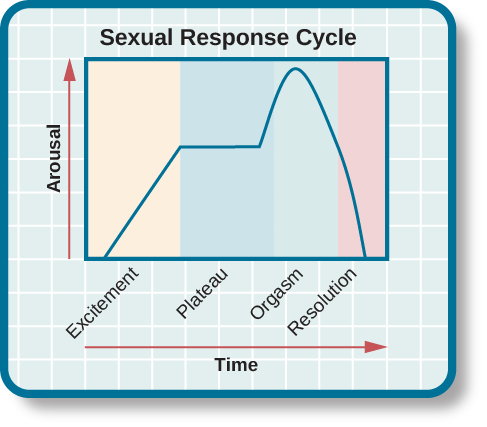
Master’s & Johnson Sexual Response Cycle 
DESIRE 
“Inhibited sexual desires is a disorder of the appetitive, or pre-excitement, phase of the sexual response cycle. Both the desires and mental images for sexual activity may be impaired. The urge to be physically close, to be touched, to be aroused, and to have release is in some way inhibited so that the person is not drawn to his or her spouse. 
Some people with inhibited sexual desire are not aware of any sexual feelings at all, not even a flickering, it would not be a problem if there is no possibility for future sexual activity. Others masturbate but have no desire for the intimacy of sex with their spouse. Still others only feel sexual desire for someone they cannot have or someone who is destructive for them. And then there are those that feel sexual urges for their spouse, but only when there is no possibility on acting on those urges. 
The sexual drive can be totally blocked, or it can be misdirected. Many times there is a barrier that keeps sexual energy from being expressed or being experienced in the marriage relationship. 
Although we are all born with a sex drive, about 40% of the sexual therapy clients report disorders of sexual desire. Men, as well as women, experience loss of desire. Problems of desire are usually deeper, more resistant problems than the dilemmas of the sexual response cycle. “- Penner’s Counseling for Sexual Disorders 
Things we hear wives say for desire issues:
  • If I never had sex again I’d be fine
  • Why can’t we just connect emotionally
  • Sex is just for men
  • It’s my job/ my wifely duty
  • I’m not a sexual person 
  • My husband is a pervert
  • I’m grossed out by his arousal or sex 
  • Sex is messy 
  • It takes too much effort 
  • I don’t have sexual thoughts/I don’t ever think about it 
  • I feel normal- that no wife they know wants sex 
  • My body just doesn’t work 
Triage for trauma (sexual, betrayal), relational distress, pain 
Female Desire Problems
Relationship Issues: unresolved marital conflict often lead to sexual intimacy issues 
  • The underlying stress in the relationship must be resolved before anticipation of sexual activity with husband can be elicited – Penner’s 
– Unsatisfactory sexual response: if wife struggles becoming aroused or being orgasmic, her desire for sexual intimacy will decrease (unrealistic expectations, delayed consummation) 
Sexual conflict: inability to accept her sexuality 
  • When women experience conflict about being sexual, it may be because rigid anti-sexual teaching, pass sexual trauma, or ambivalence about being out of control and vulnerable with a man- Penner’s 
  • Rigid Anti-Sexual Teaching: most often associated with religion, where women aren’t given permission to enjoy and express their sexuality or receive sexual pleasure (purity culture, extreme modesty teaching, abstinence curriculum, scare tactics, loud silences around sexuality, etc.)
  • Sexual trauma: Many adult women have had at least one sexual experience that left them confused, guilty or traumatized. They usually blame themselves for these events, and thus feel badly about themselves sexually -Penner’s (Molestation, Incest, assault, early exposure to sexually explicit content, guilt about masturbating or fantasizing, etc.) 
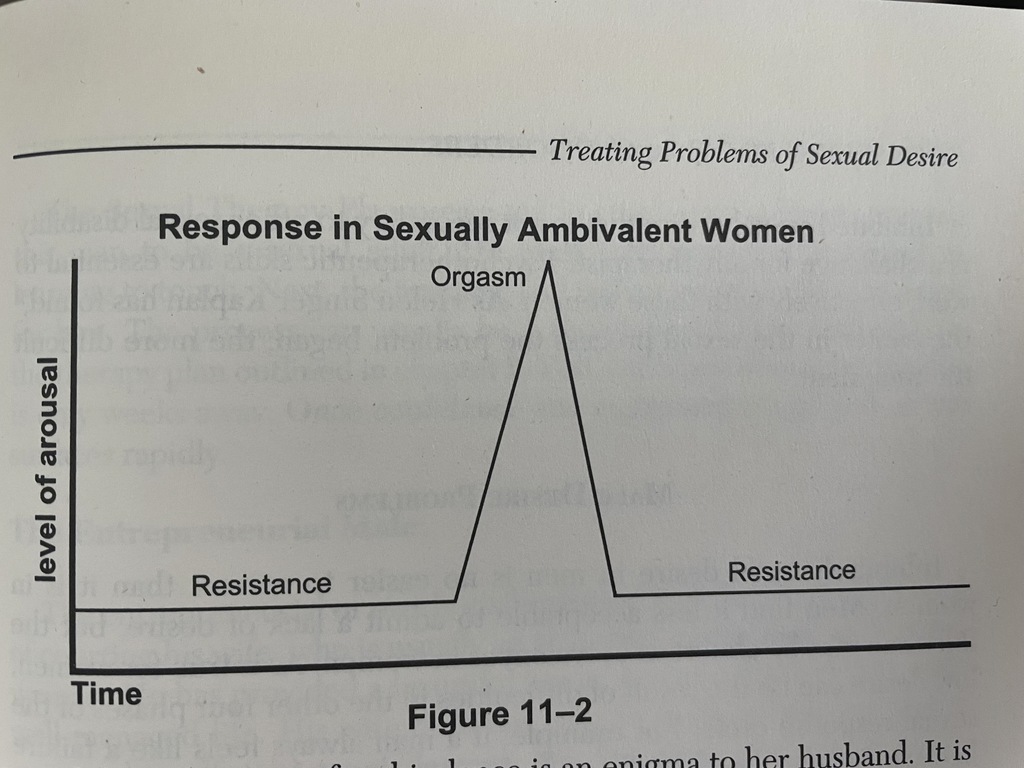
  • – Sexual ambivalence: this is a persistent avoidance of sex, these women often come from chaotic, dysfunctional homes. Their bodies may respond sexually, however, pre and post times of sexual intimacy anything sexual is aggressively avoided or can be experienced as dormant. Sexual ambivalence can be challenging for husbands to understand because their wive’s bodies respond well during intercourse. 
Male Desire Problems
Inhibited sexual desire problems in men is no easier to correct than it is in women. Men find it less acceptable to admit a lack of desire, but the dilemma may be almost as prevalent as in women. – Penner’s
– Sexually Naive Male: little to no experience, underdeveloped in emotional expression, feelings of inadequacy (respond very well to education)
Entrepreneurial Male: Goal oriented and does not prioritize sex 
– Emotional-Sexual Blocks: 
  • Lack of bonding in infancy: Decrease or absence of bonding in infancycan lead to a fear of expressing and receiving intimacy 
  • – Sexual trauma: Negative feelings associated with themselves and sexuality, guilt/shame/humiliation for example (effects men in the same way it effects women) 
  • – Rigid Anti-Sexual Teaching: most often associated with religion, where men aren’t given permission to enjoy and express their sexuality or receive sexual pleasure (purity culture, extreme modesty teaching, abstinence curriculum, scare tactics, loud silences around sexuality, etc.)
  • – Controlling, male deprecating mother: “If a boy grew up in a home with a mother that totally usurped any of his sense of power and independence as he was developing, he will be very hesitant to allow himself to be open and vulnerable with a woman. Having sex with his wife may elicit an overwhelming sense of panic at being swallowed up or being controlled.” -Penner’s
  • – Homosexually Oriented Male: if a man is attracted to men, even if never expressed, will make it difficult for him to respond positively to sex with a women or his wife (this is not our area of expertise and would likely need to refer)
External Factors that Affect Men & Women Sexual Desire
– Illness/Medication Side Effects
– Addiction
– Menopause or Hormone Imbalance 
– Surgery or Childbirth
*It is always wise to rule out external factors through a physical exam with a physician 
AROUSAL 
Sexual desire in marriage usually leads to the initiation of sexual activities that stimulate sexual excitement or arousal. Failure of the natural, involuntary bodily response of sexual excitement, is usually due to anxiety, although physical, medical causes should be ruled out before assuming an emotional basis- Penner’s 
Things we hear wives say when it’s strictly arousal- frustration with their body
  • It takes too long to get there
  • My mind is always distracted
  • I don’t know what feels good 
  • It’s embarrassing to say what feels good 
  • My desire/excitement build with no orgasm 
  • My orgasms are weak (if at all)
  • I used to be able to orgasm, why can’t I now 
Problems of Arousal for Women
Lack of feelings of arousal: Inhibited sexual excitement for women, once negatively labeled frigidity, is usually experiential, not actual. In other words, the women’s body is responding with vaginal lubrication, nipple erection, and initial engorgement; however, she does not subjectively feel aroused. Her emotions are not connected with her involuntary bodily responses. These women who lack the feelings of arousal are mentally disconnecting themselves from their bodies. They have not programmed themselves to be sexual persons or to enjoy the giving and receiving of sexual pleasure. They see sex as a duty they perform to keep their husband happy and themselves from feeling guilty.- Penner’s 
  • Something in the past has made it difficult to make a positive association with sexuality and themselves. They must learn how to give themselves permission to be sexual, connect sexual feelings to somatic experience, remove pressure to please, and learn to respond to their bodies and pursue sexual pleasure so that arousal can be achieved. 
Lack of vaginal lubrication and engorgement: In women, this actual lack of physical arousal is rare, probably because womentend to be more passive sexually and arousal is a passive, parasympathetic nervous system response. The emotion of anxiety can, however, interrupt or prevent arousal for women. The sympathetic nervous system becomes dominant because of anxiety and interferes with the involuntary parasympathetic nervous system response. – Penner’s 
  •  –Lack of understanding of how to properly stimulate her body to arousal by herself and her husband. Unfortunately female arousal is more complicated than male arousal and is not often pursued as a priority. And when properly stimulated is discovered, her body will respond. 
Problems of Arousal for Men
-Erectile Dysfunction: a man’s inability to achieve or maintain an erection. 
  • – Causes of Erectile Dysfunction:
    • – Anxiety: performance fear due to a past experience and preoccupation with recurrence, or another new negative experience. Anxiety increases with each failure. 
      • Negative experiences– premature or delay ejaculation, fear of rejection, etc. 
    • – Physical Factors: erection is a vascular response, so any type of blood flow issues can cause ED, hormonal imbalances, diabetes, medication side effects, addiction, smoking. 
TREATMENT
Restoring the Pleasure Assignments broken down into subsection and the purpose within each section
Phase 1– undoing the trauma of awkward sex and establishing intimacy
  • Assignments 1-10
Phase 2– education, rebuilding sexual selves 
  • Assignments 11-23 
Phase 3 – pairing positive sexual feelings with safe sexual experiences 
  • assignments 24-end
  • *** Anorgasmia or Pain protocols will be added at the very beginning of third section 
CLINICIAN RESOURCE (all Penner quotes were pulled from this source for today’s training) 
Counseling for Sexual Disorders by Penner & Penner, 1990 https://www.amazon.com/Counseling-Sexual-Disorders-Resources-Christian/dp/084990482X

MCO - CEU Tracker

  • MM slash DD slash YYYY

12/1/21 Team Meeting

Dec. 1 Life @ MCO Report


MCO Wellness Advocate Program: 

Help those you care about connect with the care they need!

We are so excited to launch the MCO Wellness Advocate Program. As a member of the MCO Wellness Advocate Program, you can help advocate for the importance of mental, emotional, relational, and spiritual wellness, and spread the word about the professional care that MyCounselor provides.
Each person you refer will receive a discount on their first session and, as a thank you, you will receive a $25 gift card of your choice!
The MCO Wellness Advocate Program is a community of people who believe in the importance of biblically integrated and clinically informed Christian Counseling who want to help others connect with counseling that really works! Watch the video below to learn more.


Learn More & Become an Advocate: https://mycounselor.online/mco-wellness-advocates/

Clients Loving on our Clinicians

  • Emily Hurst: Emily is warm and doesn’t make talking about sex therapy awkward at all!
  • Lane: We love our sessions with Lane. He is insightful and helpful in getting us to communicate better and really express our feelings to one another. He has been especially helpful to me in that he provides the intellectual rigor (the “why”) behind what he says. We rely on his training and experience to help us recover and strengthen our marriage. Thank you, Lane!
  • Melanie: I have been seeing Melanie for over a year and a half. She is kind and honest. She had been extremely helpful.
  • Alyssa: Alyssa has been a big help to my depression and trauma. It has been my first experience with counseling and she has been wonderful.
  • Melissa: Honestly, I’m having a hard time with my faith, but I feel like almost every session is definitely spirit led and exactly what I need.

December Birthdays

Danielle Schaefer: December 1st

“Danielle, you are a beautiful person that deserves the best of birthdays!  I hope your day is filled with much love and fun, making you feel extra special! Your gentleness, sweet spirit and wisdom is such a gift to our clients and the MCO team.  Enjoy your special day and an even better year”!  Rosie

Tina Mendeleyev – December 8th 

“A very Happy Birthday to you, Tina! It has been a gift to work with you and I feel blessed to have gotten to know you a little more over these last couple of months. I truly appreciate just how much you do for us in AR and  with insurance billing. I hope this next year brings you immeasurable joy”! ~ Samantha

Josh Spurlock – December 24th 

“Josh-Happy Birthday!  You are such an amazing leader and friend.  I feel so blessed to have had the opportunity over the years to know and work with you.  I am praying you are blessed on your birthday!  Take time to enjoy something you like with your family!  Here’s to another great year!” ~Shaun

William Woodward – December 27th 

William, hoping you have a fun and memorable birthday surrounded by the ones you love and lots of cake! We are so grateful to have you on the MCO team and hope this year is better than the last.  Happy Birthday!” ~ Rosie

Leona Scifres – December 31st 

Leona, You are such a light! It has been my pleasure getting to know you the last few months. I will always remember our laughter and friendship bonding on the cruise and how you can make anyone feel welcomed and loved! You have a heart of GOLD! I hope you have a wonderful Birthday and a fabulous year!!! I hope you get all the puppy kisses from Goose and get to celebrate with good friends and drinks! Cheers! Hugs, and lots of Love, Ryenn”

Prayer Requests

Lacey– family is in need of your prayers. Our 8 y/o grandson, Jensen Lee has just been diagnosed with Leukemia. We are in shock and trying to get our kids everything they need before they head to St Jude’s today. Please pray for our sweet boy as he has to walk this journey.  Please pray for our son and his wife as no parent is ever prepared for this. Please pray for us as our grandparent and parent hearts are breaking as our kids hurt.

Fun Fact about September!

From May thru October when I am not working, you can find me and my family boating on Tablerock Lake in Branson.  My husband is an avid slalom skier, and I recently learned to water ski a couple summers ago.  My goal next summer is to learn to slalom.  We will see how it goes!  Our favorite days are our family days on the lake!


Didactic Materials

Clients will come to us and present with inhibited sexual desire and might have trouble with arousal as well. However, not every inhibited sexual desire means that there is a struggle with arousal. But if there is a struggle with arousal, there probably is an inhibited sexual desire. It is important for us to be able to know the difference between sexual desire disorders and arousal disorders. The DSM-V has combined the two. 
DSM criterion – 
  • Female Sexual Interest/Arousal Disorder
    • Lack of, or significantly reduced, sexual interest, as manifested by at least three of the following:
      • Absent/reduced interest in sexual activity 
      • Absent/reduced sexual/erotic thoughts or fantasies
      • Absent/reduced sexual excitement/pleasure during sexual activity
      • No/reduced initiation of sexual activity
      • Absent/reduced sexual interest in response to any internal or external sexual/erotic cues (written, verbal, or visual)
      • Absent/reduced genital or nongenital sensations during sexual activity
    • Symptoms have persisted for at least 6 months
    • Symptoms cause clinically significant distress in the individual
    • Sexual dysfunction is not better explained by a nonsexual mental disorder or as a consequence of severe relationship distress or other stressors or substance/medication or other medical issues.
    • Specify whether:
      • Lifelong
      • Acquired
    • Specify whether:
      • Generalized
      • Situational
    • Specify current severity
      • Mild
      • Moderate
      • Severe
  • Male Hypoactive Sexual desire disorder
    • Persistently or recurrently deficient sexual/erotic thoughts or fantasies and desire for sexual activity. 
    • Symptoms have persisted for at least 6 months
    • Symptoms cause clinically significant distress in the individual
    • Sexual dysfunction is not better explained by a nonsexual mental disorder or as a consequence of severe relationship distress or other stressors or substance/medication or other medical issues.
    • Specify whether:
      • Lifelong
      • Acquired
    • Specify whether:
      • Generalized
      • Situational
    • Specify current severity
      • Mild
      • Moderate
      • Severe
Master’s & Johnson Sexual Response Cycle 
DESIRE 
“Inhibited sexual desires is a disorder of the appetitive, or pre-excitement, phase of the sexual response cycle. Both the desires and mental images for sexual activity may be impaired. The urge to be physically close, to be touched, to be aroused, and to have release is in some way inhibited so that the person is not drawn to his or her spouse. 
Some people with inhibited sexual desire are not aware of any sexual feelings at all, not even a flickering, it would not be a problem if there is no possibility for future sexual activity. Others masturbate but have no desire for the intimacy of sex with their spouse. Still others only feel sexual desire for someone they cannot have or someone who is destructive for them. And then there are those that feel sexual urges for their spouse, but only when there is no possibility on acting on those urges. 
The sexual drive can be totally blocked, or it can be misdirected. Many times there is a barrier that keeps sexual energy from being expressed or being experienced in the marriage relationship. 
Although we are all born with a sex drive, about 40% of the sexual therapy clients report disorders of sexual desire. Men, as well as women, experience loss of desire. Problems of desire are usually deeper, more resistant problems than the dilemmas of the sexual response cycle. “- Penner’s Counseling for Sexual Disorders 
Things we hear wives say for desire issues:
  • If I never had sex again I’d be fine
  • Why can’t we just connect emotionally
  • Sex is just for men
  • It’s my job/ my wifely duty
  • I’m not a sexual person 
  • My husband is a pervert
  • I’m grossed out by his arousal or sex 
  • Sex is messy 
  • It takes too much effort 
  • I don’t have sexual thoughts/I don’t ever think about it 
  • I feel normal- that no wife they know wants sex 
  • My body just doesn’t work 
Triage for trauma (sexual, betrayal), relational distress, pain 
Female Desire Problems
Relationship Issues: unresolved marital conflict often lead to sexual intimacy issues 
  • The underlying stress in the relationship must be resolved before anticipation of sexual activity with husband can be elicited – Penner’s 
– Unsatisfactory sexual response: if wife struggles becoming aroused or being orgasmic, her desire for sexual intimacy will decrease (unrealistic expectations, delayed consummation) 
Sexual conflict: inability to accept her sexuality 
  • When women experience conflict about being sexual, it may be because rigid anti-sexual teaching, pass sexual trauma, or ambivalence about being out of control and vulnerable with a man- Penner’s 
  • Rigid Anti-Sexual Teaching: most often associated with religion, where women aren’t given permission to enjoy and express their sexuality or receive sexual pleasure (purity culture, extreme modesty teaching, abstinence curriculum, scare tactics, loud silences around sexuality, etc.)
  • Sexual trauma: Many adult women have had at least one sexual experience that left them confused, guilty or traumatized. They usually blame themselves for these events, and thus feel badly about themselves sexually -Penner’s (Molestation, Incest, assault, early exposure to sexually explicit content, guilt about masturbating or fantasizing, etc.) 
  • – Sexual ambivalence: this is a persistent avoidance of sex, these women often come from chaotic, dysfunctional homes. Their bodies may respond sexually, however, pre and post times of sexual intimacy anything sexual is aggressively avoided or can be experienced as dormant. Sexual ambivalence can be challenging for husbands to understand because their wive’s bodies respond well during intercourse. 
Male Desire Problems
Inhibited sexual desire problems in men is no easier to correct than it is in women. Men find it less acceptable to admit a lack of desire, but the dilemma may be almost as prevalent as in women. – Penner’s
– Sexually Naive Male: little to no experience, underdeveloped in emotional expression, feelings of inadequacy (respond very well to education)
Entrepreneurial Male: Goal oriented and does not prioritize sex 
– Emotional-Sexual Blocks: 
  • Lack of bonding in infancy: Decrease or absence of bonding in infancy can lead to a fear of expressing and receiving intimacy 
  • – Sexual trauma: Negative feelings associated with themselves and sexuality, guilt/shame/humiliation for example (effects men in the same way it effects women) 
  • – Rigid Anti-Sexual Teaching: most often associated with religion, where men aren’t given permission to enjoy and express their sexuality or receive sexual pleasure (purity culture, extreme modesty teaching, abstinence curriculum, scare tactics, loud silences around sexuality, etc.)
  • – Controlling, male deprecating mother: “If a boy grew up in a home with a mother that totally usurped any of his sense of power and independence as he was developing, he will be very hesitant to allow himself to be open and vulnerable with a woman. Having sex with his wife may elicit an overwhelming sense of panic at being swallowed up or being controlled.” -Penner’s
  • – Homosexually Oriented Male: if a man is attracted to men, even if never expressed, will make it difficult for him to respond positively to sex with a women or his wife (this is not our area of expertise and would likely need to refer)
External Factors that Affect Men & Women Sexual Desire
– Illness/Medication Side Effects
– Addiction
– Menopause or Hormone Imbalance 
– Surgery or Childbirth
*It is always wise to rule out external factors through a physical exam with a physician 
AROUSAL 
Sexual desire in marriage usually leads to the initiation of sexual activities that stimulate sexual excitement or arousal. Failure of the natural, involuntary bodily response of sexual excitement, is usually due to anxiety, although physical, medical causes should be ruled out before assuming an emotional basis- Penner’s 
Things we hear wives say when it’s strictly arousal- frustration with their body
  • It takes too long to get there
  • My mind is always distracted
  • I don’t know what feels good 
  • It’s embarrassing to say what feels good 
  • My desire/excitement build with no orgasm 
  • My orgasms are weak (if at all)
  • I used to be able to orgasm, why can’t I now 
Problems of Arousal for Women
Lack of feelings of arousal: Inhibited sexual excitement for women, once negatively labeled frigidity, is usually experiential, not actual. In other words, the women’s body is responding with vaginal lubrication, nipple erection, and initial engorgement; however, she does not subjectively feel aroused. Her emotions are not connected with her involuntary bodily responses. These women who lack the feelings of arousal are mentally disconnecting themselves from their bodies. They have not programmed themselves to be sexual persons or to enjoy the giving and receiving of sexual pleasure. They see sex as a duty they perform to keep their husband happy and themselves from feeling guilty.- Penner’s 
  • Something in the past has made it difficult to make a positive association with sexuality and themselves. They must learn how to give themselves permission to be sexual, connect sexual feelings to somatic experience, remove pressure to please, and learn to respond to their bodies and pursue sexual pleasure so that arousal can be achieved. 
Lack of vaginal lubrication and engorgement: In women, this actual lack of physical arousal is rare, probably because women tend to be more passive sexually and arousal is a passive, parasympathetic nervous system response.  The emotion of anxiety can, however, interrupt or prevent arousal for women. The sympathetic nervous system becomes dominant because of anxiety and interferes with the involuntary parasympathetic nervous system response. – Penner’s 
  •  – Lack of understanding of how to properly stimulate her body to arousal by herself and her husband. Unfortunately female arousal is more complicated than male arousal and is not often pursued as a priority. And when properly stimulated is discovered, her body will respond. 
Problems of Arousal for Men
-Erectile Dysfunction: a man’s inability to achieve or maintain an erection. 
  • – Causes of Erectile Dysfunction:
    • – Anxiety: performance fear due to a past experience and preoccupation with recurrence, or another new negative experience. Anxiety increases with each failure. 
      • Negative experiences– premature or delay ejaculation, fear of rejection, etc. 
    • – Physical Factors: erection is a vascular response, so any type of blood flow issues can cause ED, hormonal imbalances, diabetes, medication side effects, addiction, smoking. 
TREATMENT
Restoring the Pleasure Assignments broken down into subsection and the purpose within each section
Phase 1– undoing the trauma of awkward sex and establishing intimacy
  • Assignments 1-10
Phase 2– education, rebuilding sexual selves 
  • Assignments 11-23 
Phase 3 – pairing positive sexual feelings with safe sexual experiences 
  • assignments 24-end
  • *** Anorgasmia or Pain protocols will be added at the very beginning of third section 
CLINICIAN RESOURCE (all Penner quotes were pulled from this source for today’s training) 

Counseling for Sexual Disorders by Penner & Penner, 1990 https://www.amazon.com/Counseling-Sexual-Disorders-Resources-Christian/dp/084990482X 

MCO - CEU Tracker

  • MM slash DD slash YYYY

11/24/21 Team Meeting

Nov. 24 Life @ MCO Report


Farwell from Anna McGuire

“It has been an honor and joy to have been a part of this team. During my time at MCO, I have learned and grown so much, I contribute so much of that to my interactions with each of you. I’m so thankful for the work this team does for the Kingdom. Blessings to you all!” ~ANNA

MCO Wellness Advocate Program: 

Help those you care about connect with the care they need!

We are so excited to launch the MCO Wellness Advocate Program. As a member of the MCO Wellness Advocate Program, you can help advocate for the importance of mental, emotional, relational, and spiritual wellness, and spread the word about the professional care that MyCounselor provides.
Each person you refer will receive a discount on their first session and, as a thank you, you will receive a $25 gift card of your choice!
The MCO Wellness Advocate Program is a community of people who believe in the importance of biblically integrated and clinically informed Christian Counseling who want to help others connect with counseling that really works! Watch the video below to learn more.


Learn More & Become an Advocate: https://mycounselor.online/mco-wellness-advocates/

Clients Loving on our Clinicians

  • Britni: I greatly appreciate how warm and inviting Britni is. It felt easy to trust her, especially on an online setting. This feeling of being welcomed and knowing that our 45 minutes is a safe place have done wonders for me.
  • Rachel: Rachel is warm and engaging. I feel that she is a good fit for me.
  • Melanie: It’s amazing to be able to talk to someone about deep seated patterns in life and how to address them!
  • Lacey: Always a pleasure to speak with our counselor.
  • Mary: I have been doing counselling with Mary and can see an improvement in my overall health and wellness. Very thankful for this option of ONLINE and for the opportunity!

November Birthdays

Mary Faxon – November 19th

Mary! Where to start?! Happy birthday to one of the most caring, kind, compassionate, empathetic, caring, genuine, and authentic humans and therapists I have every had the honor of working alongside and guiding. You are bound for greatness and I cannot wait to see what the future holds for you! Don’t hold back celebrating YOU today and enjoy every moment. You deserve it, girl! And again, HAPPY BIRTHDAY!!!! ~ Rachel

Melanie Hart – November 24th

Melanie, you are a gem! I wish you the greatest of birthdays with many more to follow. The love, care and concern you have for your clients is incredible.  This month we celebrate you, a woman that shows the heart of Christ and genuinely cherishes His people.  Enjoy your special day cause you deserve it! ~ Rosie

November Celebrations

Danielle is Pregnant with #3

Danielle is pregnant with her third child and rocking it as a clinician here at MCO.  Her bundle of joy should be making an appearance Feb 2nd!  Congrats Danielle!


Prayer Requests

Lacey- family is in need of your prayers. Our 8 y/o grandson, Jensen Lee has just been diagnosed with Leukemia. We are in shock and trying to get our kids everything they need before they head to St Jude’s today. Please pray for our sweet boy as he has to walk this journey.  Please pray for our son and his wife as no parent is ever prepared for this. Please pray for us as our grandparent and parent hearts are breaking as our kids hurt.

Kiran– My husbands health and healing. Healing for my sons broken leg.

Sarah- Soldiers across the country, including my husband, are being escorted and “ordered” to take the vaccine on a new timeline and are being told that if you request any exemptions, you’ll be denied and chaptered out of your military career before they can ever look at your paperwork. Our family is directly being negatively impacted by the events of our country today and feel very helpless. Please pray for our peace of mind and for how this is impacting other aspects of our life plans and physical/family planning goals.

Mary- Pray for the single mother of 2 precious girls, my former students in Vietnam. Girls drowned close to their home.  The family and community are recovering and the mom is staying connected with the underground church there so that’s a blessing in the middle of grief.

Mary –My aunt is with her son and daughter-in-law who can care more fully for her as she has now broken both hips that were brittle from extended treatment. She’s in good spirits but we just don’t know what it will look like for her in this time. The foster teens in her care are doing well on their own and have their own place and working on completing education.

Britni– My nana had surgery to remove breast cancer. Everything is looking fine but please pray for my mom and her heart as she helps my nana recover.

Josh Lolling-  IBS, changes in my role at MCO, MCO is growing and changing.

Anonymuos-  Wisdom and understanding as I navigate new season of my life


Fun Fact about Chauncey!

I was in the Flying High Circus for a total of three years. My circus acts were the Flying Trapeze, Teeter Board (the act where we are all stacked on top of each other), Quartet Adagio, Stilt Walking/Juggling/Hand Balancing, and Chinese Pole/my main act (where I learned how to do the human flag). It all sort of happened accidentally. I only auditioned because I liked a girl who was auditioning at the time. I truthfully thought the Circus was the weirdest thing ever, but I auditioned to hang out with this person. It turned out that she didn’t get accepted and I did. My love of sports helped me adapt to the physical demands of the circus. From my first workout/training class I was hooked. A performer is not just required to perform. You start out as a “rigger” (another term for grunt worker), where you are working to know/learn how to set up and tear down all sound, tech, and lighting equipment for every act before ever being considered the opportunity to perform. You constantly need to stay in great physical shape (working out around 2-3 times daily), because you are waiting for the opportunity for a Circus Director to say, “alright son, show me what you got!” They can choose you at any point to get up and perform under pressure. The process is very competitive, but once you’re in, you become a tight knit family. Performers often go on to other performance based careers throughout the globe.  I was given the opportunity to perform with Cirque Du Soleil, but I knew God was moving me to stop, be still/pursue Him, and work through personal struggles at the time, so I listened. Overall, the experience helped me connect/build relationships with many people, have a greater appreciation for performance athletes, and strengthened my ability to keep moving forward in the face of fear…plus it’s not a bad thing to put on a resume lol 🙂


MCO - CEU Tracker

  • MM slash DD slash YYYY